Osteogenic Loading — The Science Behind Stronger Bones
How 10 minutes a week triggers your body's natural bone-building response — grounded in Wolff's Law, NIH-funded research, and decades of peer-reviewed clinical evidence.
Wolff's Law — Your Bones Adapt to Force
In 1892, German surgeon Julius Wolff published a groundbreaking observation: bone tissue adapts its structure in direct response to the mechanical loads placed upon it. Load a bone, and it gets stronger. Remove the load, and it weakens.
Living, Adaptive Tissue
Bones are far from static. At any given moment, osteoclasts break down old bone tissue while osteoblasts build new density. In healthy bone, these processes stay balanced. When osteoclasts outpace osteoblasts — from aging, inactivity, or hormonal changes — the result is net bone loss: osteopenia and eventually osteoporosis.
The NASA Connection
Astronauts in zero gravity lose bone density at alarming rates — up to 1-2% per month. This confirmed what Wolff theorized: without mechanical loading, bones weaken. The same principle explains why bedridden patients and people in casts experience rapid bone loss. Your skeleton needs force to stay strong.
Why Intensity Matters More Than Duration
Bone appears to respond to a threshold of loading intensity rather than to accumulated time. In a population study of 724 adolescents, Deere et al. (2012, JBMR) found that only high-impact activity above 4.2 g of acceleration was positively related to femoral neck bone density and hip geometry — moderate and low impacts were not. Intensity was what tracked with stronger bone; volume was not.
This is consistent with why walking (roughly 1.0–1.5x body weight) does little for bone density in adults who already walk regularly, while jumping and sprinting in youth are associated with the strongest skeletons. It's not duration — it's peak intensity that appears to signal adaptation.
A note on honesty: the Deere study is cross-sectional and measured impact accelerations in adolescents, not force at the bone in adults. The "multiples of body weight" figures we display on our own equipment are a performance measure of the force you produce — useful for tracking your own progress over time — not a validated dose of bone growth. Force becomes strain differently in every person depending on joint angle and bone geometry.
Mechanotransduction — How Force Becomes Bone
The process by which physical force is converted into biological bone growth is called mechanotransduction. Here's how it works at the cellular level:
Force Application
When sufficient compressive force is applied to bone (≥4.2x body weight), it creates microscopic fluid flow through the bone's internal canal network (the lacunar-canalicular system).
Osteocyte Sensing
Osteocytes — the most abundant bone cells — act as mechanosensors. They detect the fluid shear stress and convert mechanical signals into biochemical responses through their dendritic processes.
Signaling Cascade
Stimulated osteocytes release signaling molecules (prostaglandins, nitric oxide, Wnt proteins) that recruit osteoblasts to the site. This triggers the bone remodeling cycle in favor of formation.
New Bone Formation
Osteoblasts deposit new collagen matrix and mineralize it with calcium and phosphate, creating denser, stronger bone tissue. This process continues for days to weeks after the initial stimulus.
Spectrum™ — Four Devices, Total Skeletal Loading
The Spectrum system is the heart of every OsteoStrong session. Four patented devices, each engineered to place optimal compressive force on a specific region of the musculoskeletal system. Together, they provide axial loading across your entire skeleton in just 10 minutes.
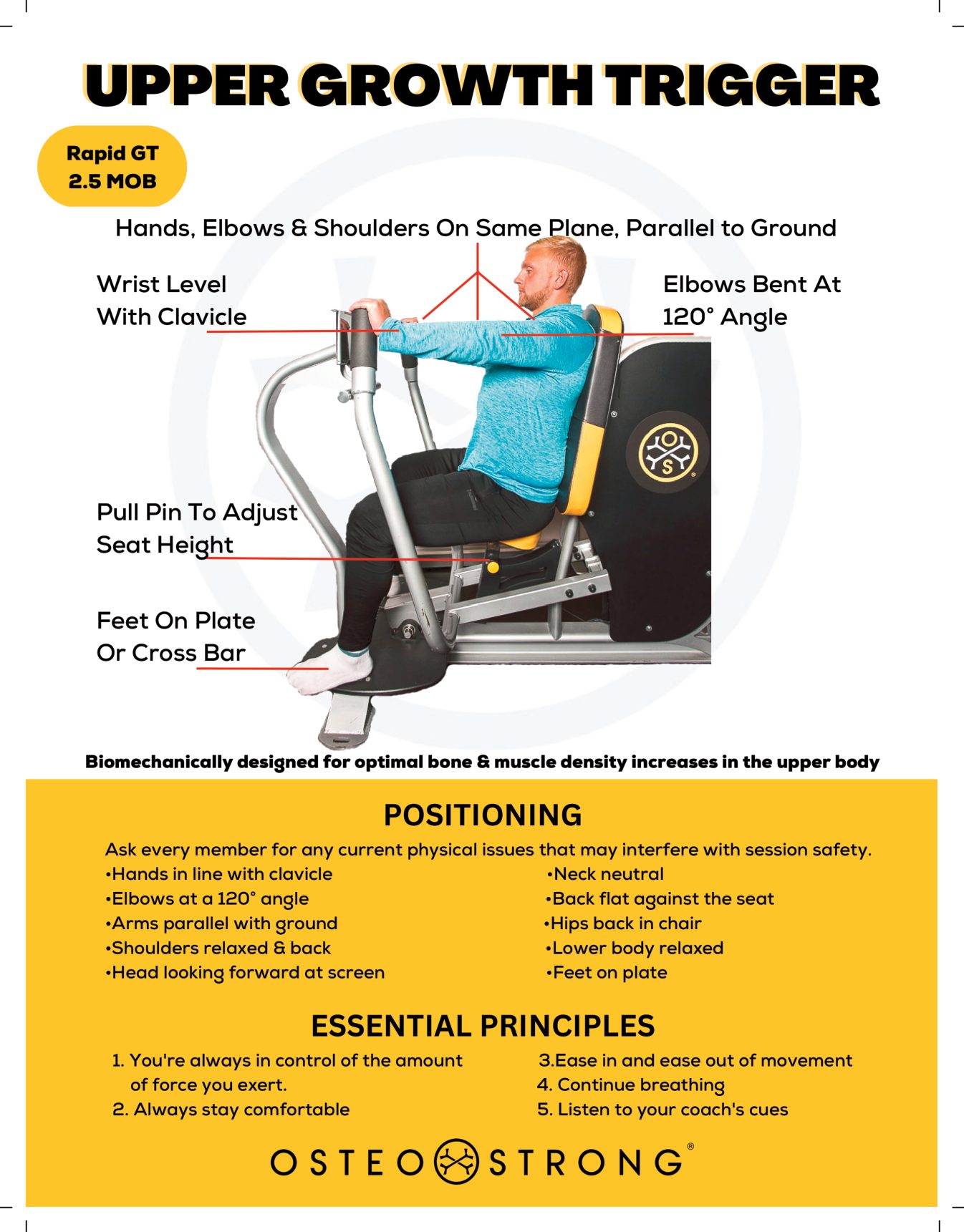
Upper Growth Trigger
Hands → Wrists → Shoulders → ClavicleA chest press position that loads the upper kinetic chain. Members typically achieve 5–8x body weight of compressive force through the upper extremities.
View Positioning Guide →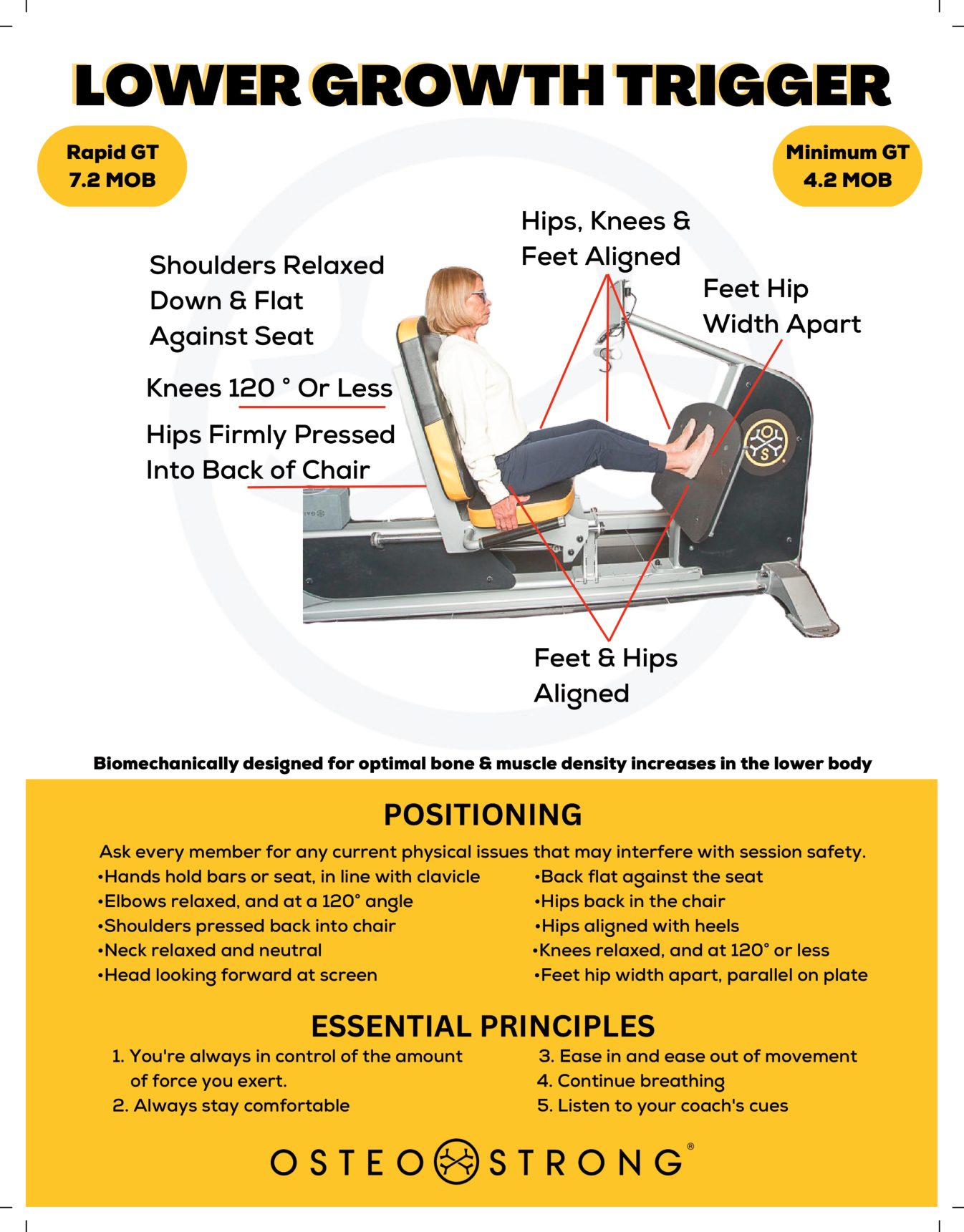
Lower Growth Trigger
Feet → Ankles → Knees → HipsA leg press position targeting the lower kinetic chain — the most critical area for preventing hip and femoral fractures. Members commonly exceed 6–10x body weight.
View Positioning Guide →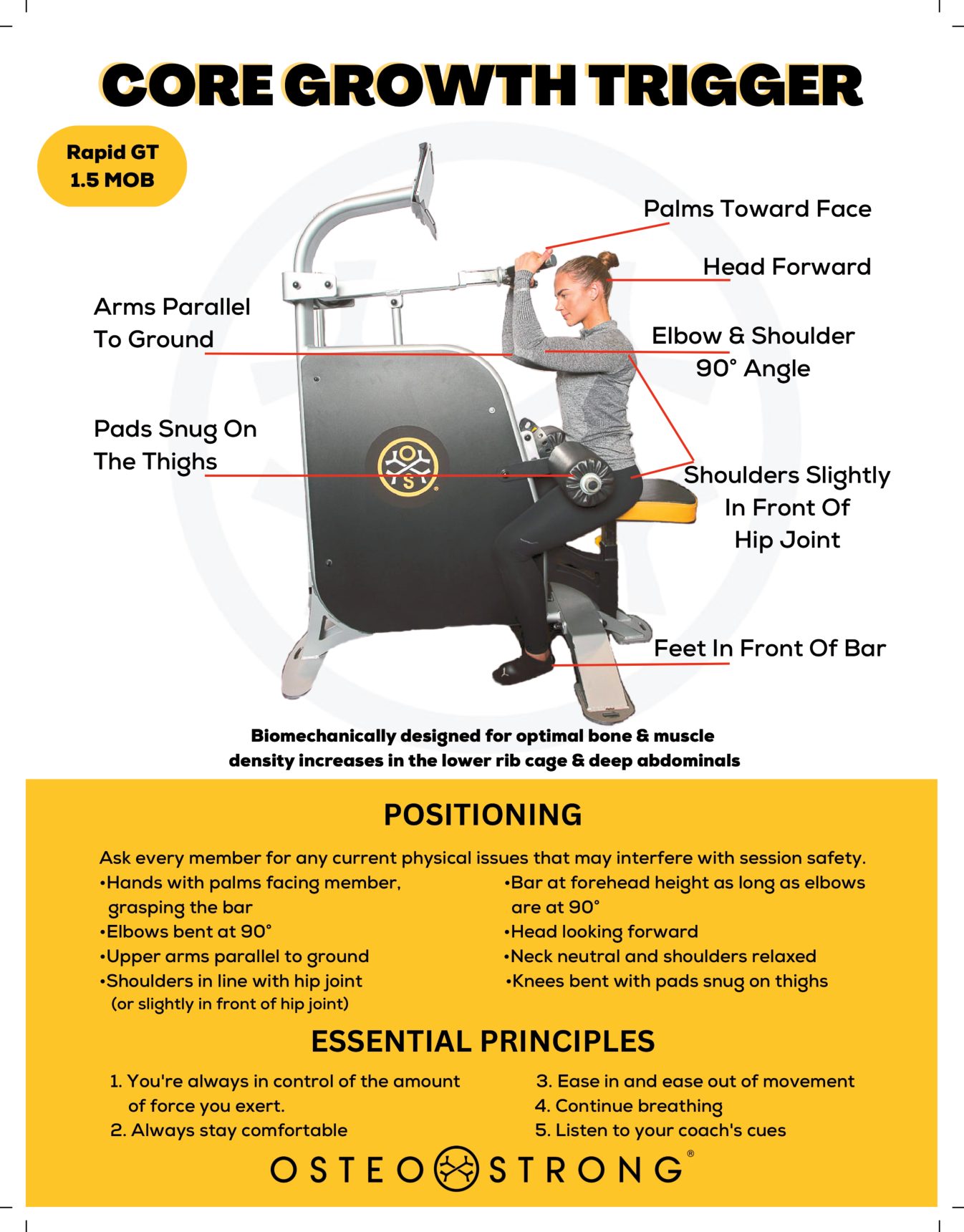
Core Growth Trigger
Rib Cage → Spine → CoreA vertical pull-down that loads the axial skeleton through the core, targeting spinal bone density and supporting trunk stability.
View Positioning Guide →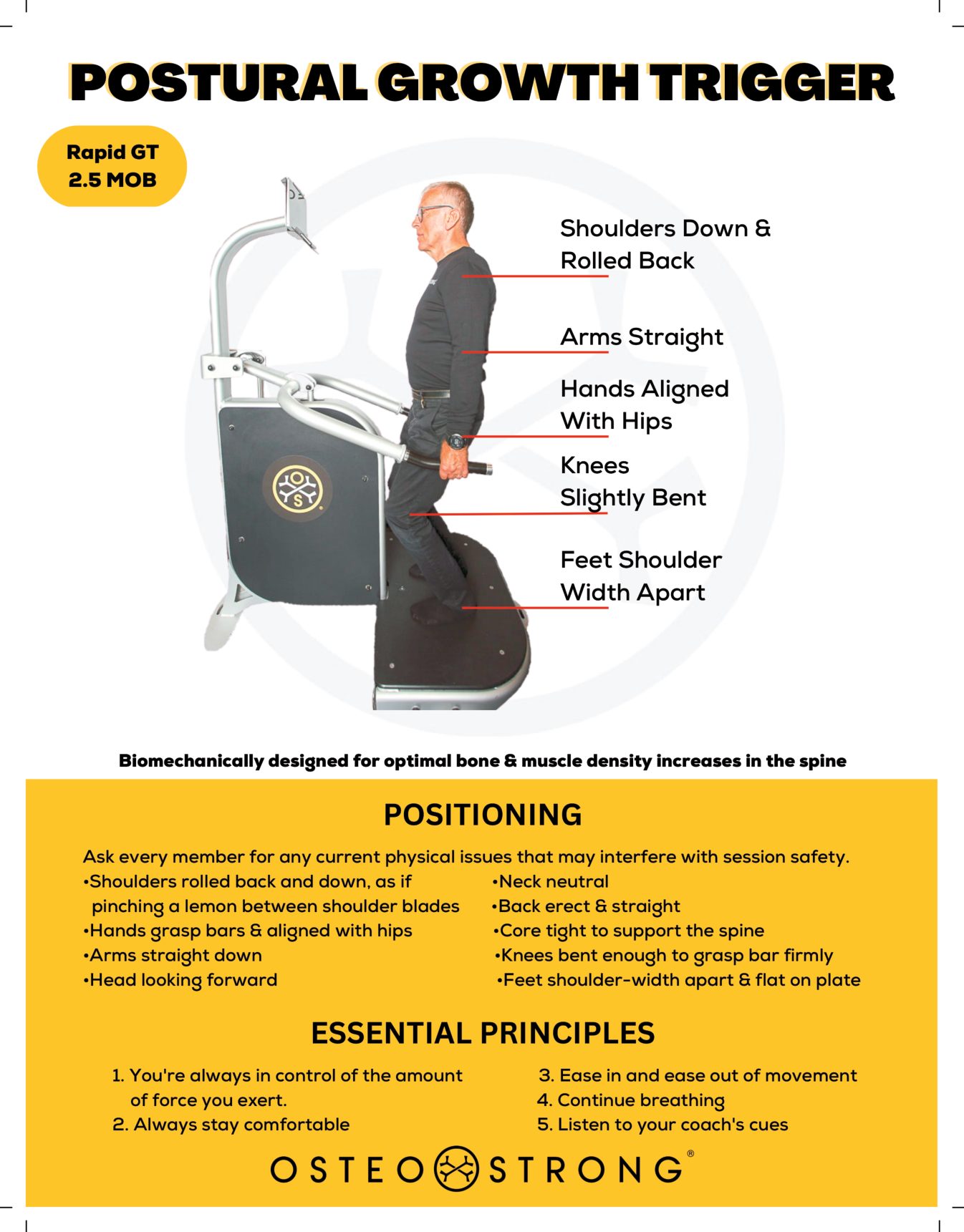
Postural Growth Trigger
Feet → Spine → NeckA deadlift position that loads the entire posterior chain from feet to cervical spine, improving posture and loading the vertebral column.
View Positioning Guide →Self-Loaded & Safe
Every Spectrum device is self-loaded — you control the force. The isometric design means there's no visible joint movement, no risk of dropping weights, and no jerky motions. The equipment simply provides resistance while you push or pull at your maximum safe capacity. This makes osteogenic loading accessible to people of all ages and fitness levels, including those with osteoporosis.
Why 10 Minutes Changes Everything
Peak Force, Not Duration
Research shows it's the peak load — not total exercise time — that triggers bone adaptation. A few seconds of maximum force does more than an hour of moderate activity.
Once Per Week
Bone remodeling is a slow biological process. One weekly session provides the stimulus; your body spends the remaining 6 days building. More frequent sessions don't accelerate the process.
Isometric = Safe
No joint movement means no risk of impact injury. The equipment provides resistance at your own capacity — you can never overload yourself because you control the force.
Measurable Progress
Every session records your force production in pounds and multiples of body weight. Over weeks and months, you can track your strength gains with precision data.
Published Research & Clinical Evidence
Every study below is linked to its source so you can read it yourself. We've listed the trials that tested loading directly first — including a 2025 study in the Journal of Clinical Endocrinology & Metabolism of the OsteoStrong system itself — followed by the mechanistic and review literature. Where a study has limitations, we say so.
How to judge a study before you read one
Not all evidence carries the same weight, and you shouldn't have to be a researcher to tell the difference. Under each study below we've labelled what kind it is and written a plain-English note on what you should — and shouldn't — take from it. As a rule of thumb:
- Meta-analysis — many trials pooled. The most reliable thing here, because one small study can mislead and twenty rarely do.
- Randomized controlled trial — people assigned to groups by chance, so the groups start out comparable. The gold standard for a single study.
- Non-randomized study — people chose their group. Useful, but the ones who opted in may differ in ways nobody measured.
- Observational study — nobody was assigned anything; researchers watched what people already do. Shows associations, never proof of cause.
- Mechanism or laboratory research — explains how something works in cells. Tells you a process is real, not how much your own bone will change.
Two more habits worth having: check who paid for the study, and check how many people were in it — a result from 30 people is a hint, not a fact. We've flagged both below wherever they apply, including where it counts against us.
Brief, Low-Impact, High-Intensity Osteogenic Loading in Postmenopausal Osteoporosis
The first peer-reviewed clinical study of the OsteoStrong system by name, published in a leading endocrinology journal. 147 postmenopausal women with osteoporosis, 74 using the four-device circuit and 73 not, followed with DXA at baseline and 12 months. Lumbar spine BMD improved significantly both in women taking no antiresorptive medication and in those who were, and the intervention appeared to add to the effect of medication at the spine, hip and femoral neck. Read it with two things in mind: the authors describe it as a quasi-experimental case-series, not a randomized trial, and the study was funded by Osteofit Hellas, the OsteoStrong operator in Greece. Both are disclosed in the paper. It is meaningful evidence, not final proof.
This is the closest thing that exists to a study of what we actually do, and it's in a serious journal. Take it as encouraging, not conclusive: because the groups weren't randomly assigned, women who chose to train may have differed from those who didn't in ways nobody measured. The industry funding doesn't make it wrong, but it does mean it needs to be repeated by people with nothing to gain.
MelaOstrong — Osteogenic Loading With and Without Melatonin (Randomized Controlled Trial)
An independent randomized controlled trial from Duquesne University School of Pharmacy, and the most rigorous test of osteogenic loading to date: participants were randomized to real loading (1.5–4.2 multiples of body weight) or mock loading, each with or without 5 mg of melatonin, over a full year. We include it because the result is genuinely mixed. Force production rose in the loading groups as expected, and the loading-plus-melatonin group showed significant gains in lumbar spine BMD and T-score. But loading alone did not reach statistical significance, and no significant differences were found between groups. It is a pilot-sized study, so it is underpowered rather than negative — but an honest reading is that osteogenic loading on its own has not yet been proven superior to a sham in a randomized trial. Anyone evaluating us deserves to know that, and it is why we point to the whole body of evidence rather than a single number.
The most rigorous test of osteogenic loading so far, and it did not go entirely our way. Only the group that combined loading with melatonin showed clear bone gains; loading by itself didn't reach statistical significance. The study was small, which makes it hard to detect real effects, so this isn't proof that loading fails — it's proof that the question isn't settled. We'd rather show you this than have you find it somewhere else.
Exercise Intensity and Bone in Postmenopausal Women — Meta-Analysis of 53 Trials
The clearest evidence that intensity, not duration, is what moves bone. Pooling 53 randomized trials and 63 interventions, high-intensity exercise produced roughly three times the lumbar spine BMD effect of moderate or low intensity (0.031 vs 0.012 and 0.010 g/cm²). The same relationship between load magnitude and bone response seen in animal research holds in humans. The authors note that high-intensity data remain limited — only 4 of the 63 interventions qualified — and no advantage was seen at the femoral neck, possibly due to lack of statistical power.
If you only read one study here, make it this one. Pooling 53 trials is far more reliable than any single study, and it found that hard effort produced roughly three times the spine benefit of gentle exercise. That is the entire premise of what we do: the intensity of the load, not the hours spent, is what bone responds to. Honest caveat — only four of the trials tested truly high intensity, so the high-intensity number rests on less data than the rest.
MEDEX-OP — Bone-Targeted Exercise With and Without Bone Medication
A randomized trial of 115 postmenopausal women with low bone mass, answering a question we are asked constantly: should you do this if you are already on medication? High-intensity resistance and impact training improved lumbar spine BMD by 1.9% versus 0.1% for low-intensity Pilates-based exercise, and exploratory analysis suggests medication and loading may enhance one another rather than compete. Compliance was 82% and both programs were well tolerated. The medicated subgroups were small, so the combination finding is suggestive rather than settled.
Answers the question we hear most from people already on medication: is this redundant? The high-intensity group gained nearly 2% at the spine while the gentle-exercise group gained essentially nothing, and the early signs suggest medication and loading help each other rather than overlap. Treat the medication finding as a promising hint — those subgroups were small.
Is Heavy Loading Safe for Low Bone Mass? — Supervised High-Intensity Training
Directly addresses the most common fear about loading with osteoporosis. In postmenopausal women with low to very low bone mass, brief supervised high-intensity training improved femoral neck BMD (0.3% vs −2.5% in controls), lumbar spine BMD (1.6% vs −1.7%), height and functional performance — with compliance above 87% and no injuries. Small sample, and the operative word throughout is supervised.
This is the safety answer. Women with low to very low bone mass trained at high intensity for months with no injuries and nearly 90% attendance, while controls lost bone. The word doing the work is supervised — this was coached, structured loading, not heavy lifting figured out alone. Small study, but directly on point for the fear most people arrive with.
Detraining — What Happens When You Stop (ACTLIFE Follow-Up)
Three months away from supervised training was enough to erase the lean mass and lumbar spine BMD advantages that 13 months of high-intensity exercise had produced, even though participants stayed generally active. Strength and power held up better. The authors conclude that programs for adults should be continuous rather than intermittent. We include it because it is the honest counterweight to any before-and-after number: bone responds to load that keeps coming, and it un-responds when the load stops.
The most important practical finding on this page. Thirteen months of training built real gains; three months away erased the bone and lean-mass advantage, even though people stayed generally active. Bone holds what you keep asking of it. If you're deciding whether to pause for the summer, this is your answer — consistency matters more than intensity in any single session.
LIFTMOR-M — Bone-Targeted Exercise Strategies in Men with Osteopenia and Osteoporosis
The most directly relevant trial to what we do. Researchers tested machine-based isometric axial compression — the same modality as our equipment — against high-intensity resistance training and a control group over 8 months. The isometric group improved lumbar spine BMD by +2.0% versus +0.9% in controls, alongside gains in lean mass and sit-to-stand performance. Worth noting for accuracy: the control group was not fully randomized (the authors describe the trial as semi-randomized), and the effect size is modest.
The closest match to our equipment: it tested machine-based isometric compression, which is the same kind of loading our devices provide. Spine density rose about 2% versus about 1% in controls over 8 months. Two honest notes: the control group wasn't fully randomized, and 2% is a modest number — which is what real bone change looks like.
LIFTMOR-M — Effects on Regional Bone Geometry and Strength
Companion analysis from the same trial examining bone geometry and estimated strength rather than density alone. Relevant because bone strength depends on structure and distribution of tissue, not only on the BMD number a DXA scan reports.
A companion analysis showing the same training changed bone shape and estimated strength, not just density. This matters because density is only part of what keeps a bone from breaking — geometry and structure count too. Small sample, so read it as supporting evidence rather than a standalone result.
LIFTMOR — High-Intensity Resistance and Impact Training in Postmenopausal Women
Randomized controlled trial in 101 postmenopausal women with low bone mass. Eight months of brief, high-intensity loading improved lumbar spine BMD by +2.9% versus −1.2% in the control group, and femoral neck BMD by +0.3% versus −1.9%, with one adverse event. This trial used barbells rather than machines, so we cite it as evidence for the underlying principle — that high-intensity loading builds bone in exactly the population told to avoid it — not as a study of our equipment.
One of the strongest trials in this field: 101 postmenopausal women, properly randomized, spine density up 2.9% while controls lost 1.2%. Note the honest gap — this used barbells, not our machines. We cite it for the principle that heavy loading builds bone in exactly the population most worried about it, not as a study of OsteoStrong.
Thoracic Kyphosis and Incident Fracture Following High-Intensity Exercise
Secondary analysis addressing the safety question directly: whether high-intensity loading in men with osteopenia and osteoporosis worsened spinal posture or produced vertebral fractures. An important counterweight to the assumption that people with fragile bones should avoid meaningful load.
Reassurance for anyone with a curved upper spine who has been told to avoid loading. In this follow-up, high-intensity training was not associated with the fractures people fear, and posture measures improved. It's a secondary analysis of a small trial, so it's supportive rather than definitive.
A Small Amount of High-Intensity Activity Predicts Bone Health — UK Biobank
Large independent population study using precisely measured accelerometer data in pre- and post-menopausal women. Found that a very small amount of high-intensity activity predicted better bone health — reinforcing that the intensity of loading, not the hours spent, is what tracks with stronger bone. Observational, so it establishes association rather than cause.
Data from tens of thousands of people showing that brief bursts of hard activity track with better bone health, while long stretches of light activity don't show the same relationship. Observational data can't prove cause and effect — but it points the same direction as the randomized trials above, which is what makes the overall picture credible.
High-Impact Activity and Hip BMD in Adolescents
Population study of 724 adolescents partitioning accelerometer output into impact bands. Only high impacts above 4.2 g were positively related to femoral neck BMD, hip geometry and predicted bone strength; moderate and low impacts were not. Cross-sectional, so it shows association rather than cause — but it is the clearest evidence that bone responds to a threshold of intensity rather than to accumulated activity.
Included for honesty and context, not as a claim about our program. It measured impact forces in teenagers and found higher-impact activity associated with stronger hips. It says nothing about adults, and it does not establish any specific force threshold. If you've seen a '4.2' figure attached to this study as a required dose, that's a misreading — we corrected our own page for exactly that reason.
Piezo1, Integrins and YAP/TAZ in Osteoporotic Mechanotransduction
Current review of the molecular pathway itself: how the Piezo1 ion channel and integrins on osteocytes convert mechanical force into the signaling that drives bone formation. This is the mechanism by which loading works — and it is a distinct phenomenon from the piezoelectric properties of bone tissue, which are real physics but whose physiological role remains debated.
Explains the how rather than the whether. Bone cells carry sensors — Piezo1 channels and integrins — that physically detect force and trigger the signals that build bone. This is cell-level science, so it can't tell you how much your density will change. It tells you the mechanism we rely on is real and understood, not invented marketing.
Mechanical Signaling for Bone Modeling and Remodeling
NIH-funded review establishing that bone's adaptive response is regulated by mechanotransduction — the ability of resident bone cells to perceive and translate mechanical energy into structural and biochemical changes. Confirms that mechanical loading pathways are among the most anabolic in bone.
The foundational explanation of how mechanical signals control bone building and breakdown. A review summarizes existing work rather than producing new results, so treat it as the textbook background: it's the reason loading is a legitimate approach to bone at all.
Exercise for Osteoporosis Prevention — Evidence-Based Prescription
Comprehensive evidence review confirming bone responds to loads that are high in magnitude and applied rapidly, in unusual loading directions, and with relatively few repetitions. Short bouts of loading interspersed with rest are more osteogenic than continuous loading — the scientific basis for brief, high-intensity sessions.
This is where the ten-minutes-once-a-week idea comes from. Reviewing the evidence, bone responds best to loads that are heavy, applied quickly, and repeated only a few times — and it stops responding when you keep going, because the cells briefly go numb to a repeated signal. That is why more time in a gym is not automatically more bone.
Effects of High-Impact Exercise on Bone Structure — Meta-Analysis
Meta-analysis of 28 randomized controlled trials found that moderate- to high-impact exercise improved trabecular bone density at the distal tibia and total volumetric BMD at the proximal femur. In postmenopausal women specifically, impact exercise improved trabecular vBMD by 0.79%.
Pooled evidence that impact loading improves bone density at the hip and shin. Notice the size of the effect — under 1% in postmenopausal women. That's a real, measurable change, and it's also a useful calibration: this is the honest scale of what exercise does to bone, against which any dramatic claim should be judged.
Exercising with Osteoporosis: Stay Active the Safe Way
Mayo Clinic confirms that using your muscles helps protect your bones. Weight-bearing exercise works directly on bones in the legs, hips, and lower spine to slow bone loss. Strength training is especially helpful to build back muscles important for posture and can help support bone density.
Not a study — this is Mayo Clinic's patient guidance, and it's here because it shows the mainstream medical position: using your muscles protects your bones, and strength training is specifically recommended for people with osteoporosis. If you want to know whether loading is fringe or accepted, this is your answer.
Osteocytes: Master Orchestrators of Skeletal Homeostasis
Latest 2025 research on osteocyte mechanotransduction through Piezo1 channels and integrins — the cellular mechanisms that sense mechanical force and regulate bone remodeling. Confirms osteocytes as the primary mechanosensor cells that translate physical loading into bone adaptation signals.
A 2025 review of how osteocytes — the cells buried inside your bones — sense mechanical force and decide whether to build. It confirms the biological chain that connects what you do on the equipment to what happens in the bone. Mechanism research, so it explains the process rather than predicting your results.
How to read these numbers
Real change in bone density is measured in single-digit percentages over months. For context, teriparatide — the most powerful anabolic bone drug available — produces roughly 10% at the spine over 18 months, and untreated bone in this age group typically declines 1–2% per year. Any program advertising large, rapid double-digit gains deserves scepticism, and that includes anyone in our own industry.
We would rather show you modest numbers we can stand behind than impressive ones we can't. We also don't claim that osteogenic loading prevents fractures — that has not been demonstrated for any loading program, ours included. If you have questions about any study on this page, bring them to your consultation and we'll go through them with you.
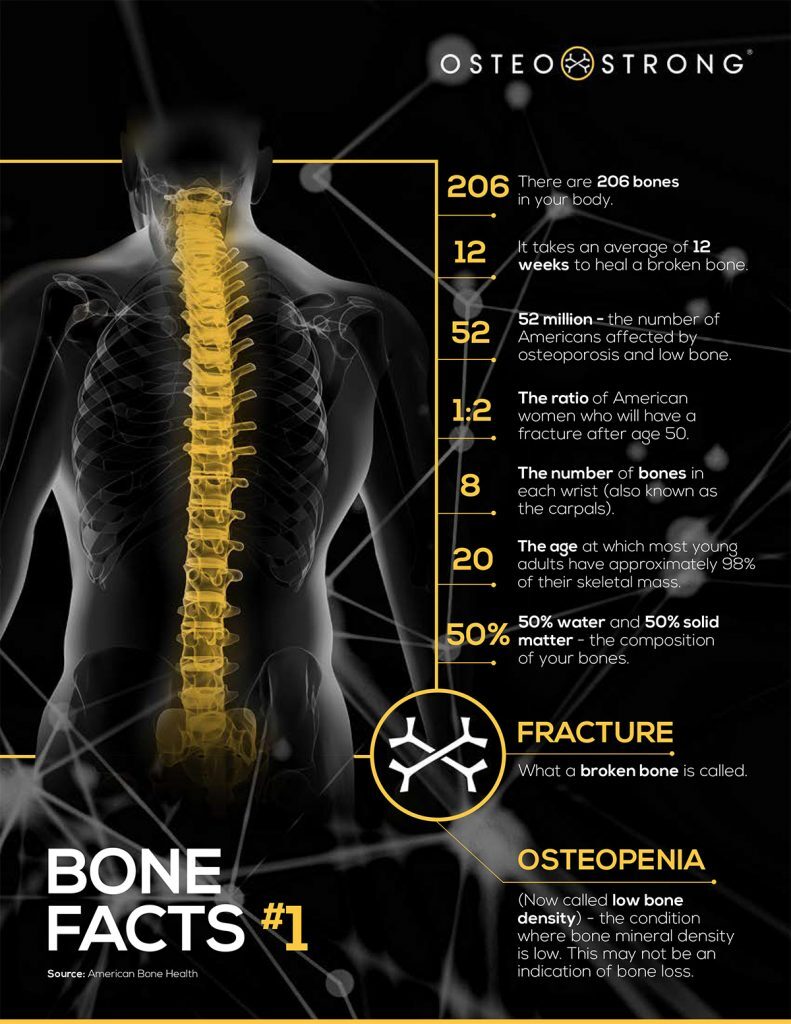
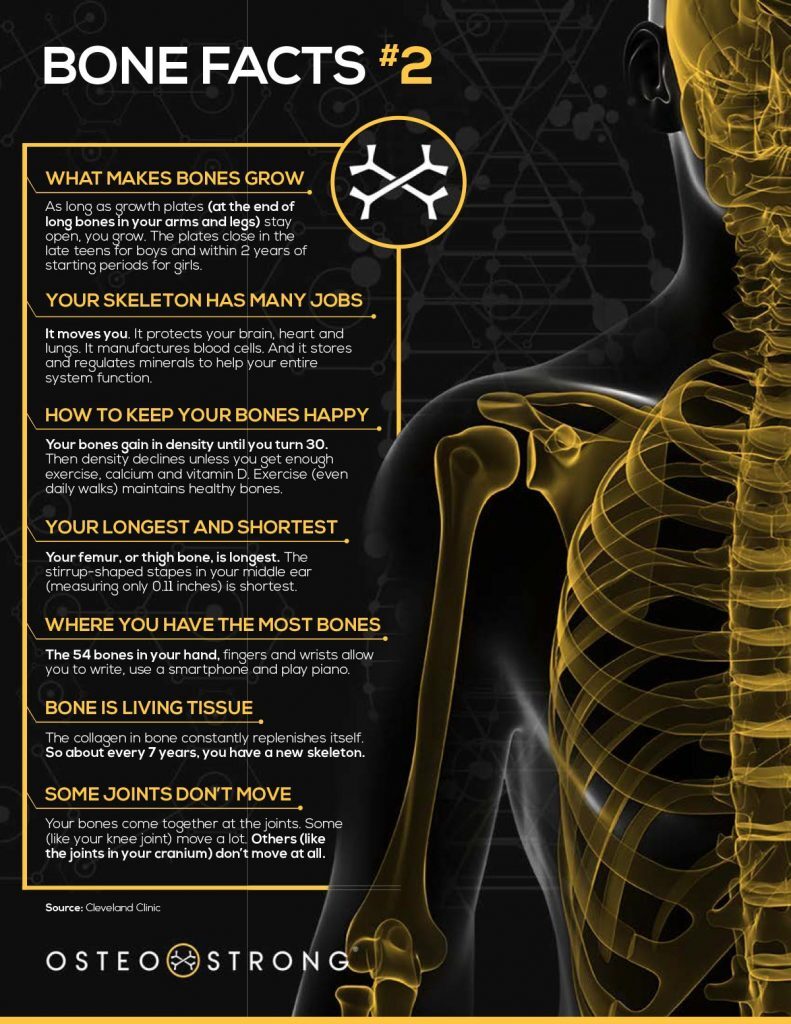
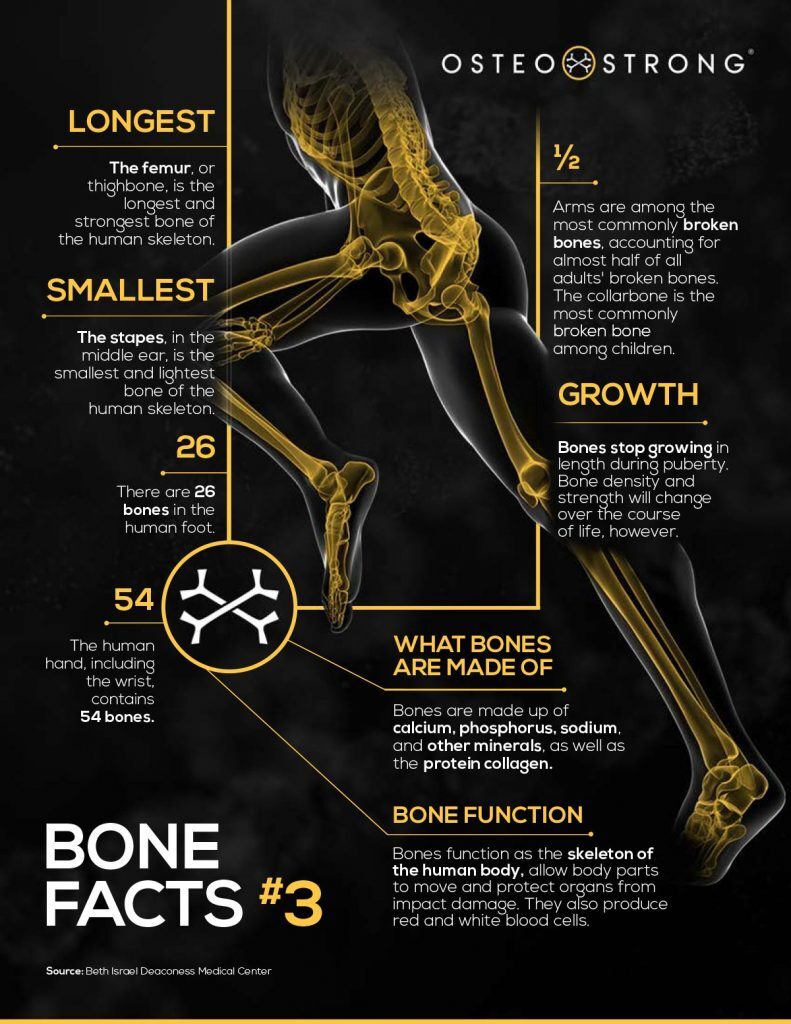
Bone Facts
Your skeletal system is more remarkable than you think. Here are some facts about the 206 bones that support everything you do.
Not sure OsteoStrong is right for you?
Fair enough — ten minutes a week sounds too easy to work, and you've probably been promised things before. So read the four-minute version first. It explains the mechanism, tells you exactly what a session is, shows what we measure, and ends with six honest questions. If none of them apply to you, it says so and tells you not to book.
Ready to Experience It?
The science is clear — your bones respond to force. Book your first assessment and see your force production numbers in real time.